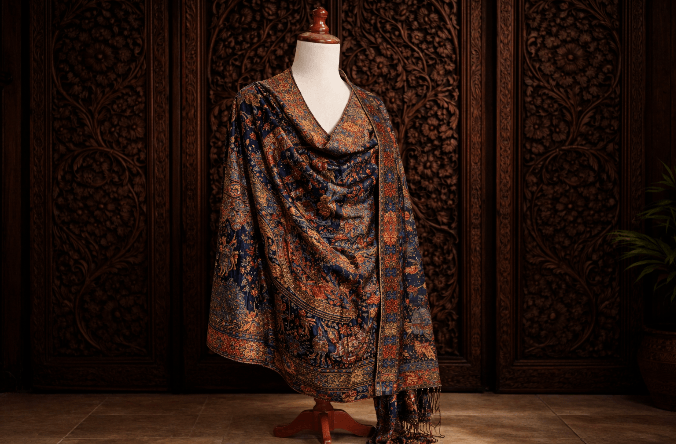
What is a Kani Shawl?
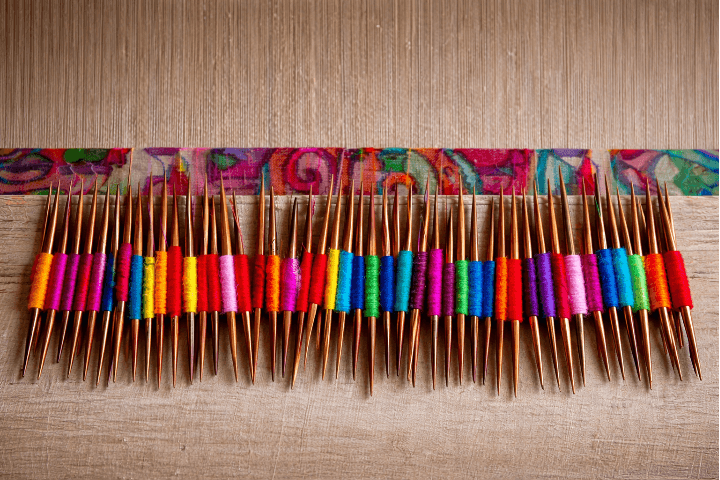
In Kashmiri, Kani denotes a small wooden stick, also called Tujli or Tuji, used in the traditional Kani weaving technique. This intricate craft is deeply rooted in Kanihama (Kani = wooden stick, Hama = village), a historic weaving village in the Kashmir Valley, a region celebrated for its association with India's finest Pashmina and cashmere.
History
Kani is an ancient weaving technique believed to date back to the 15th century, introduced by Persian artisans. After nearly disappearing in the 18th century, the craft was revived under the patronage of the Dogra rulers in the 19th century, preserving its legacy.
The Making
A Kani shawl is woven thread by thread, using 70 to 100 kanis (spindles), each carrying a different colored thread. Artisans work using a double-interlock twill tapestry technique.
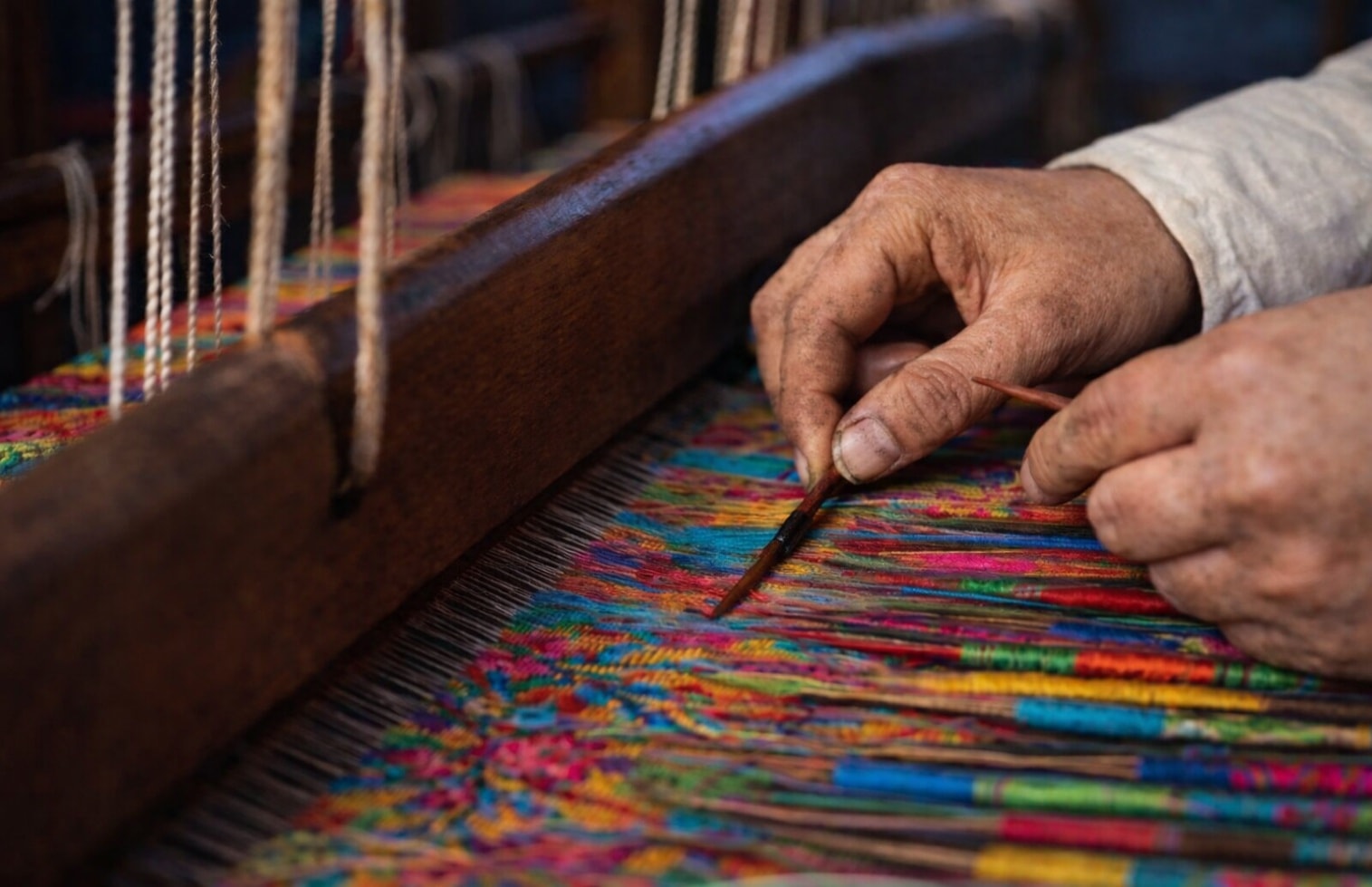
The process begins with the Naqash (the master pattern designer), who sketches elaborate motifs inspired by nature and tradition on graph paper with mathematical precision. These patterns are translated into a Talim coded instruction set, crafted by the Talim guru or master artisan, guiding the exact sequence of warp and weft threads, row by row.
Each shawl can take months or even years to complete, depending on the complexity of the design.
Each shawl can take months or even years to complete, depending on the complexity of the design.
Patterns & Motifs
Kani shawls are distinguished by their two-faced, reversible patterns and symbolic motifs. Notable motifs include:
- Darbar: Inspired by the Mughal court or Darbar.
- Char Badam & Seda Badam: Almond or paisley shapes; Char Badam is double almond, Seda Badam is vertically oriented.
- Shikargah: "Hunting scene," depicting animals often linked to royalty.
- Rindposh / Panjdar / Kev Posh: Intricate floral and paisley designs with flowing, spring-like patterns of vine, root, or flower.
Wrapping yourself in a Kani is to embrace a story that has traveled across centuries, a story of patience, skill, and unparalleled craftsmanship.
Questions We Often Hear
How can you identify an authentic Kani shawl?
Look for these signs:
- The motifs are woven directly into the fabric using small wooden bobbins (kanis), not stitched onto the surface.
- The design appears clean and well-defined on both sides, unlike many machine-made or embroidered imitations.
- Authentic Kani shawls, crafted from pure pashmina or fine wool, feel exceptionally soft, warm, and lightweight.
- Slight irregularities in the weave or motifs are a natural hallmark of genuine handmade craftsmanship.
- While some authentic Kani shawls may include supporting certification, every genuine piece should have a traceable story.
Why should I buy a Kani shawl?
A Kani shawl is a versatile addition to your wardrobe and home.
- With traditional attire: Pair it with sarees, salwar suits, or festive ensembles.
- With contemporary outfits: Drape it over dresses, tailored coats, knitwear, or monochrome ensembles, or wear it as a scarf to elevate your everyday style.
- As a statement wrap: Layer it over evening or formal wear for warmth without compromising on elegance.
- As home décor: Style it as a sofa throw or drape it over an accent chair to add warmth, texture, and a touch of handcrafted heritage to your living space.
Why are Kani shawls considered so expensive?
- Every motif is woven thread by thread, not printed.
- A single shawl can take weeks or even months to complete, depending on the complexity of the design.
- They are crafted from premium natural fibers such as pure pashmina or fine wool.
- Each shawl is handmade in limited quantities, making every piece unique.
How should a Kani shawl be cared for?
Follow these tips:
- Dry cleaning is the safest way to preserve its intricate weave and natural fibers.
- If hand washing is necessary, use cold water and a pH-neutral detergent designed for wool or other fine fabrics. Dry it flat in the shade, away from direct sunlight or heat.
- Do not wring, twist, or scrub the shawl, as this may damage the weaving.
- Store it neatly folded in a cool, dry place, and avoid hanging it for long periods to help maintain its shape.