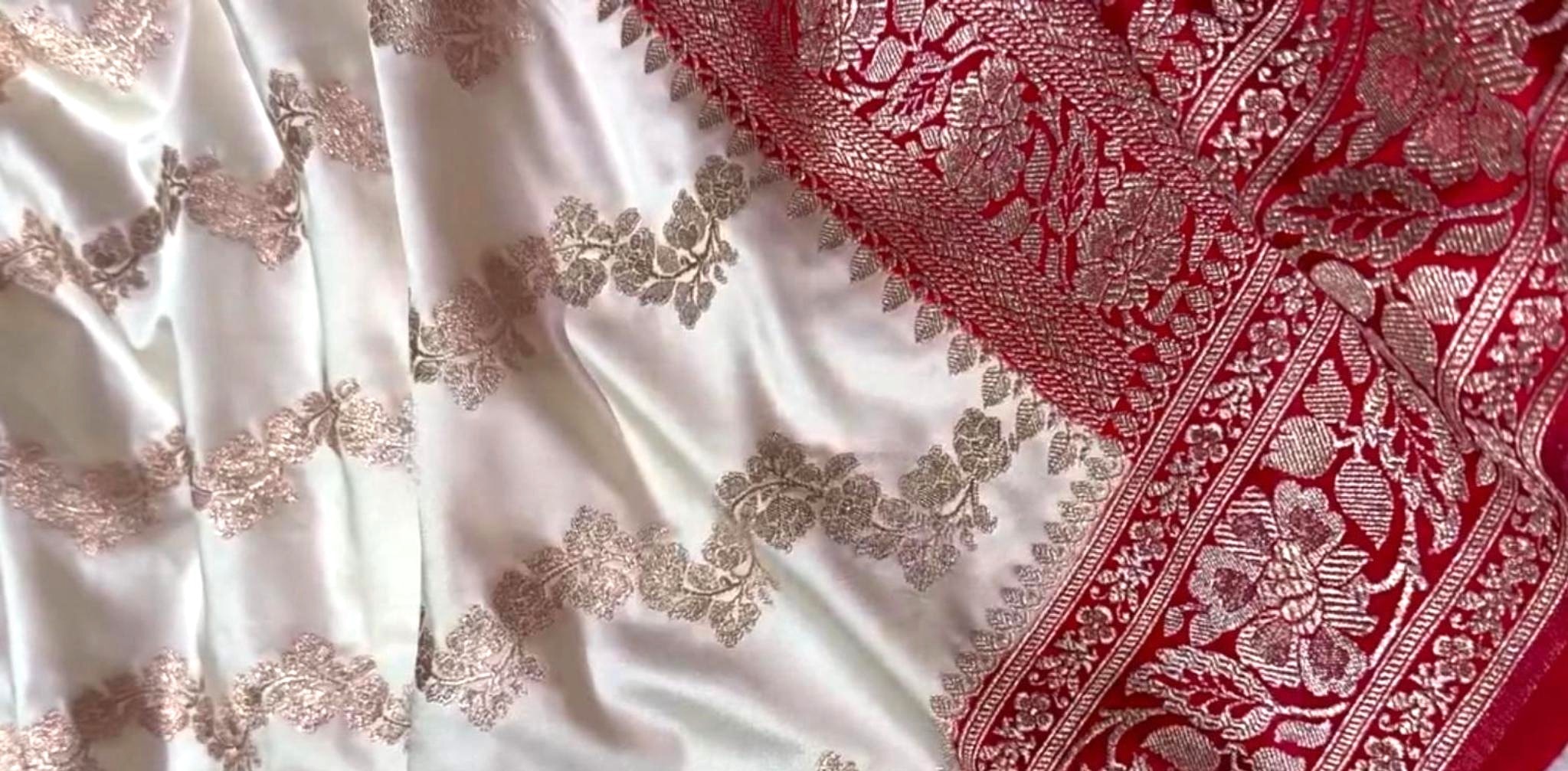
In the quiet rhythm of a handloom, Banarasi weaves come to life, crafted in silk and zari.
In the historic lanes of Varanasi, before motifs take form, it is the technique that shapes the foundation of artistry.
The Language of Banarasi Weaving
Each technique is a language of its own, quietly narrating the heritage and precision of the handloom.
Ektara (Ek Tara)
- Once reserved for royalty
- Woven on traditional pit looms using the Paanch Kaadhi system
- A single extra-weft yarn shapes the fabric
- Creates a light, mesh-like texture with understated grace
Kadhiyal (Kadiyal)
- A three-shuttle technique defined by contrast
- The body and border are woven as distinct yet interlocked systems
- Independent warps and wefts ensure seamless color separation
- Often enriched with Meenakari detailing
- Where contrast is not divided but harmonized
Kadhwa
- The most intimate expression of craftsmanship
- Each motif is woven individually, with no loose threads
- Crafted by two artisans working in quiet synchronization
- Shaped meticulously using a wooden tilli
- Creates a subtle, raised three-dimensional effect
- Slow and exacting, and impossible to replicate on powerlooms
Phekwa (Cutwork)
- Motifs emerge in a continuous weaving motion
- The extra weft travels across the fabric to form patterns
- Leaves delicate floating threads on the reverse
- Carefully hand-trimmed after weaving
- Results in a softer, flatter finish compared to Kadhwa
Dampach (Dampath)
- A traditional method that produces flat, painted-like motifs
- Often used in complex cutwork weaving
- Ensures threads remain smooth and securely placed
- Requires a high level of control and craftsmanship
Tanchoi
- Rooted in Chinese weaving influences
- Crafted using multiple-colored wefts
- Known for intricate florals, geometrics, and fine detailing
- Produces a richly textured yet fluid fabric
Gethua (Gethwa)
- An ancient technique using multi-warp heald shafts, typically 8 to 24 kaadi, on pit looms
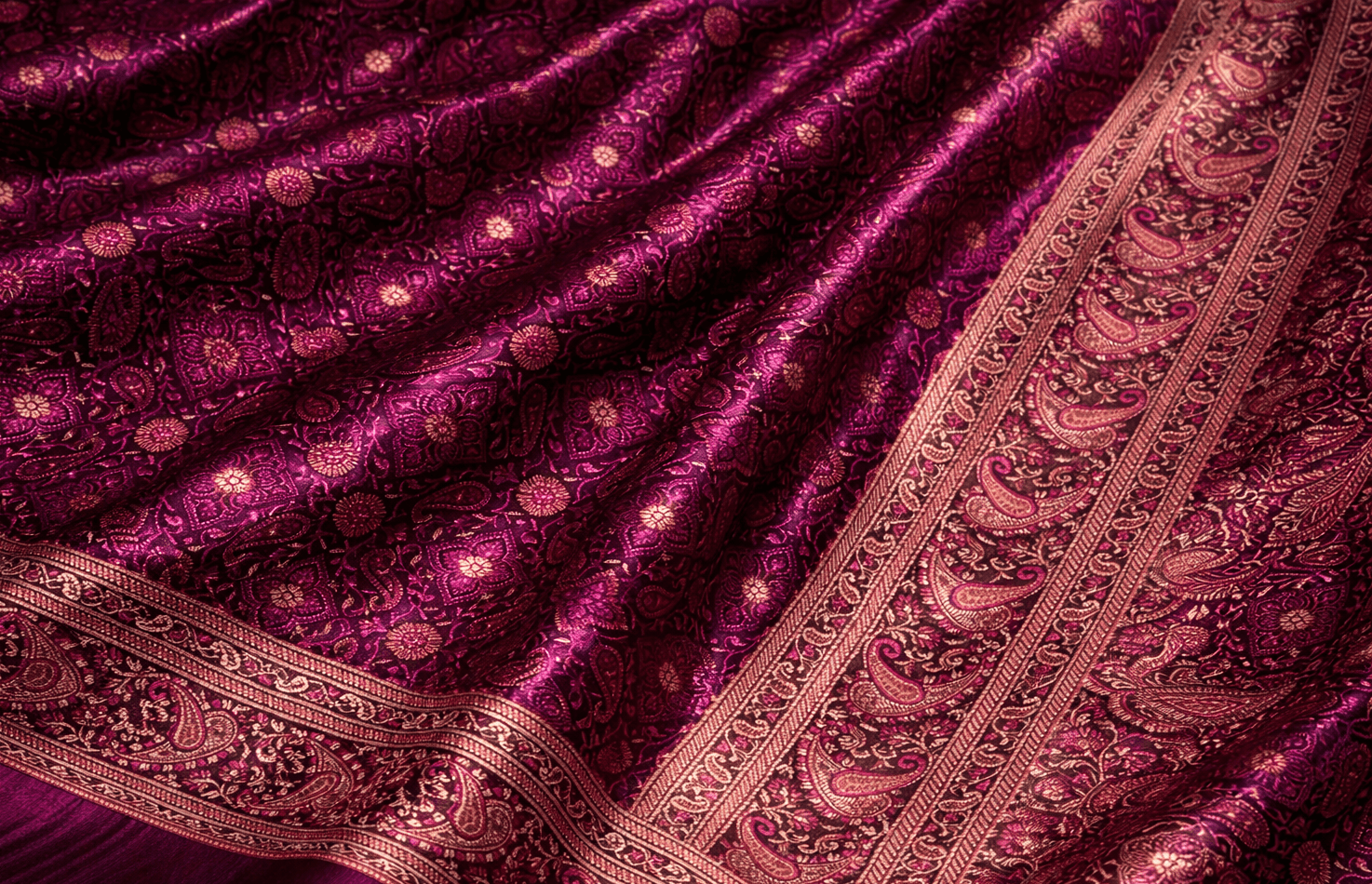
- Creates dense, richly textured fabrics with structural complexity
- Known for twill, diagonal, and diamond patterns
- Produces a heavier, more luxurious weave
Naqshi
- A technique where motifs appear almost embroidered on the fabric
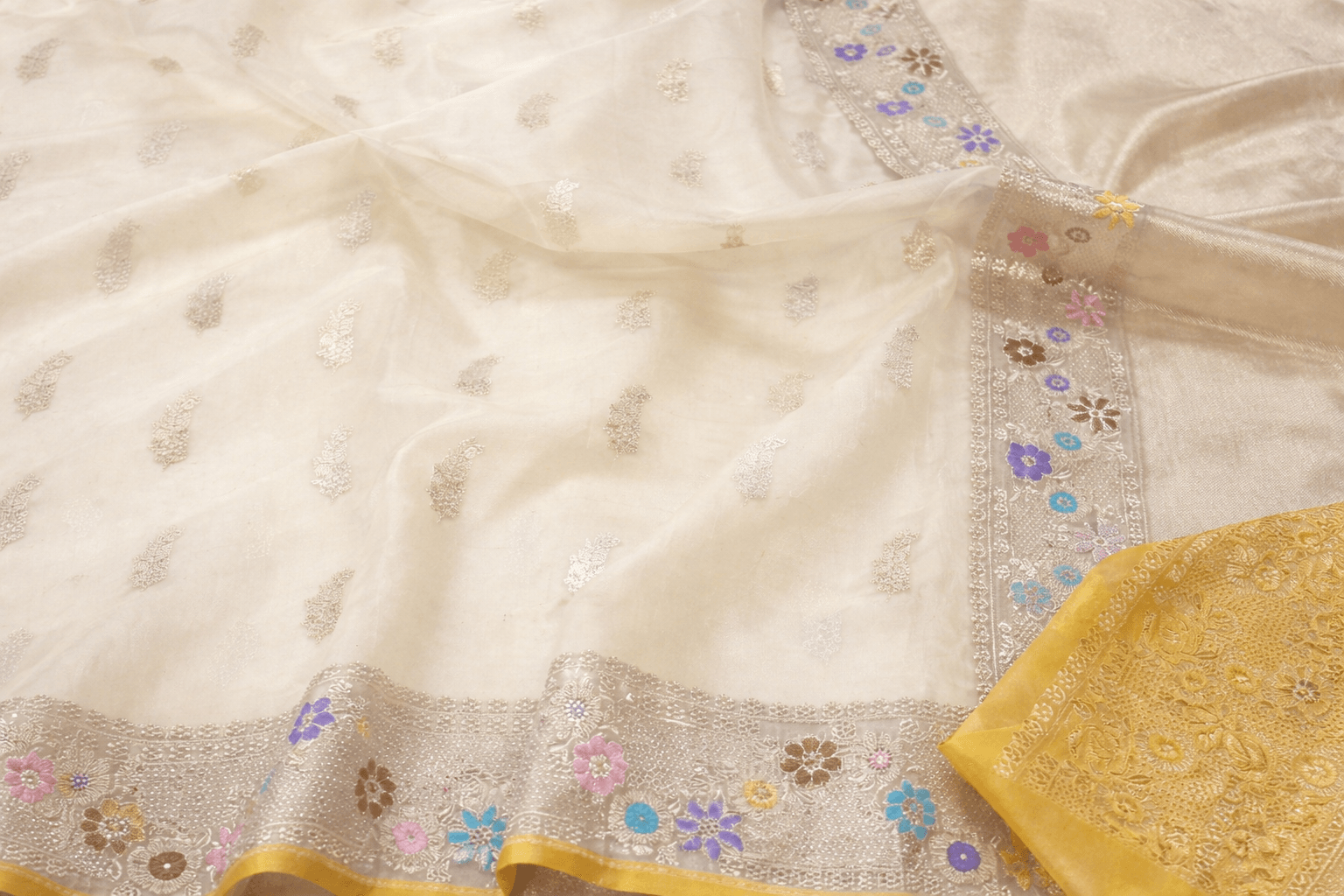
- Often executed on lighter or translucent bases
- Creates a refined, raised visual effect
- Known for its intricate detailing and precision
Khimkhwab (Kinkhwab / Kamkhwab)
- One of the most opulent forms of Banarasi brocade
- Characterized by dense zari work that often conceals the base silk
- Richly layered with gold or silver threads
- Sometimes incorporates Meenakari detailing
- Historically known as the "fabric of dreams"
Meenakari Weaving
- A celebration of color within the weave
- Inspired by the finesse of enamel artistry in jewelry
- Brings together vibrant hues, sometimes over twenty
- Adds depth, intricacy, and quiet opulence to every motif
Where Banaras Meets Bengal
As the story travels eastward to the weaving clusters of West Bengal, it finds a new expression in the Korial Banarasi saree — a seamless blend of Banaras weaving and Bengali artistry.
Crafted from mulberry silk or Katan silk, these sarees are woven using the intricate jala technique, where every motif is carefully placed with intention.
More Than a Saree
To drape a Banarasi is to wear more than a garment. It is an heirloom.